
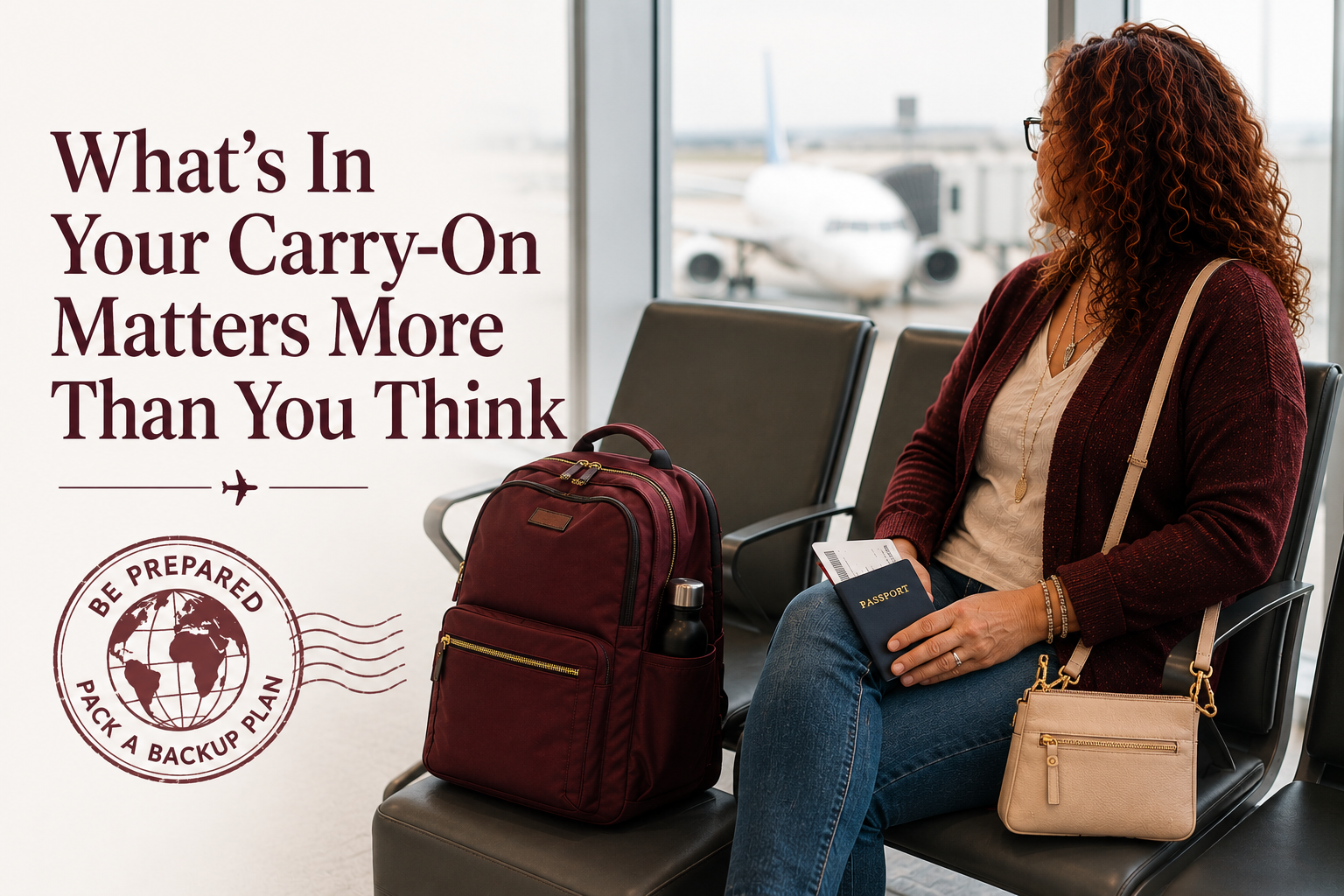
A carry-on bag isn't just extra storage. It's your backup plan.
Most trips go exactly as planned, but travel has a way of reminding us that things don't always happen on schedule. Flights get delayed. Connections get missed. Occasionally, luggage decides to arrive a day or two after you do.
That's why some of the most important items for your trip should never leave your side.
Medications, travel documents, identification, electronics, chargers, valuables, and anything you absolutely need for the first day or two of your trip belong in your carry-on, not your checked luggage.
I also recommend packing at least one change of clothes, basic toiletries that meet TSA guidelines, and anything that would be difficult or expensive to replace immediately.
Another simple tip: take a photo of your checked luggage before heading to the airport. If your bag decides to take a different journey than you planned, having a current photo makes it much easier to describe when working with airline baggage services.
It's also worth understanding the difference between a personal item and a carry-on bag. A personal item is typically something that fits under the seat in front of you, such as a backpack, purse, or laptop bag. A carry-on bag is the larger piece that goes in the overhead bin. Airline size allowances can vary, so checking your airline's requirements before travel is always a good idea.
And one final travel-day courtesy: when boarding, take your backpack off before walking down the aisle. It helps avoid accidentally bumping fellow travelers while finding your seat and makes the boarding process a little smoother for everyone.
Most travelers never need their backup plan.
But when they do, they're always glad they packed one.